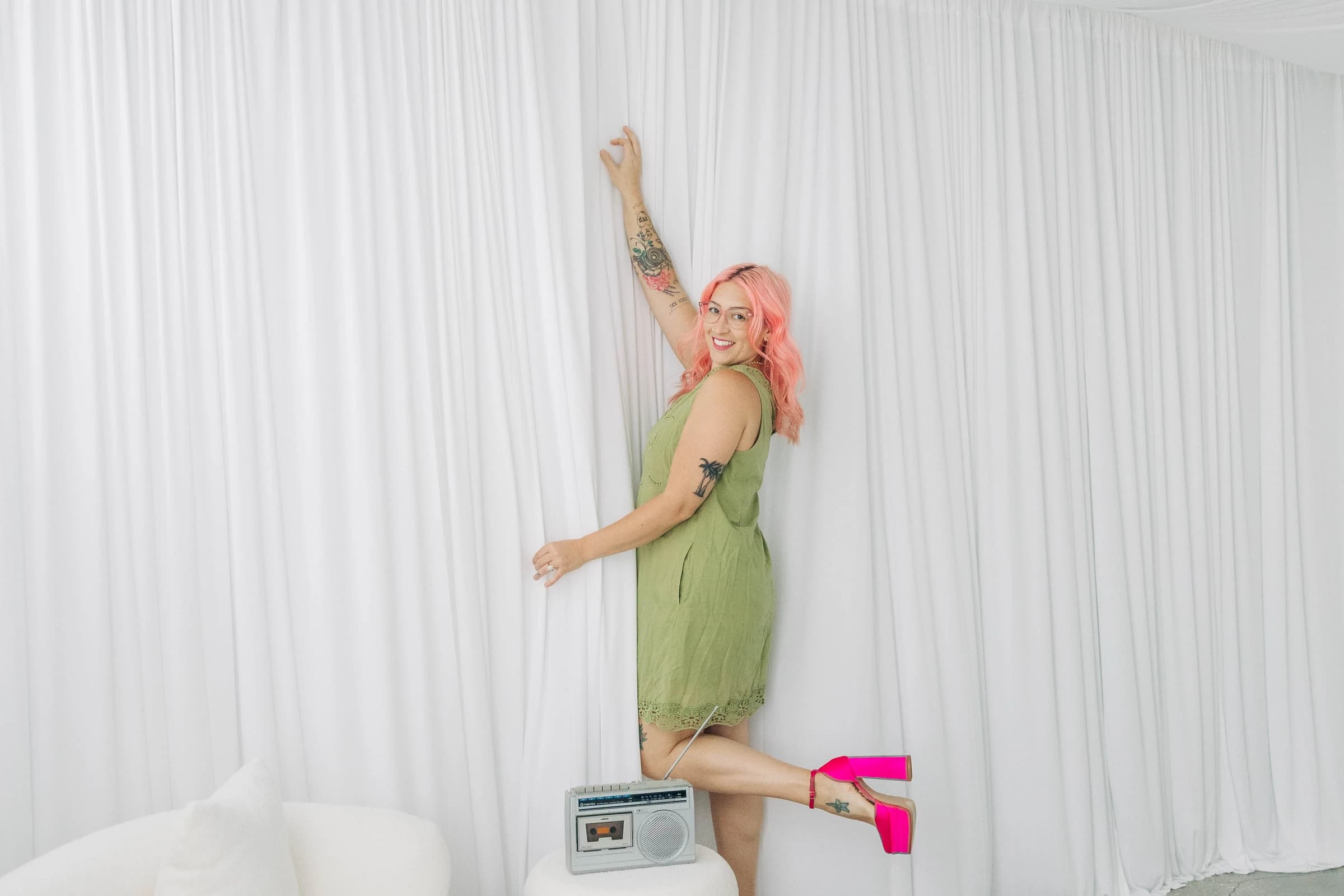
A working headshot has one job. It should make a casting team feel like they already know you before you ever walk in the room. If you are booking actor headshots in Orlando, you are shooting into a real market: theme-park entertainment, commercial and industrial work, and a film and TV scene that keeps picking up. Casting is busy, and they sort fast. The photos that get pulled from the pile are the ones that read as a real, current person the moment they land on the screen. Here is what tends to earn that look, and how to give it to them.
What a working headshot actually needs
Strip away the trends and casting is really asking one thing: does this look like the person who will show up on set? A headshot that overshoots the truth costs you the callback, because now you do not match your own photo. Aim for you on your best normal day. The things that carry that across:
- It looks current. New color, new cut, new decade of your face: if the photo does not match today, it is time for fresh frames.
- The eyes are sharp and alive. The eyes do the acting. A soft, disconnected gaze reads as nothing. A present one reads as someone worth calling in.
- The background stays out of the way. A clean, simple backdrop keeps every bit of attention on your face, which is the entire point.
- The expression is honest. Not a frozen smile you would never make. A real, grounded look that suggests there is a person and a point of view behind it.
None of that requires you to be someone else for the camera. It requires the room and the light to get out of the way so the real you comes through.
You want a theatrical look and a commercial look
Most actors leave a session with two distinct looks, and there is a good reason for it. Casting sorts by type and by tone, and the two main tones pull in opposite directions.
| Look | Reads as | Good for |
|---|---|---|
| Commercial | Bright, warm, approachable | ads, industrials, theme-park, hosting, spokesperson roles |
| Theatrical | Grounded, character-forward | film, TV, stage, dramatic and grittier roles |
The commercial frame is the friendly one, the face you would trust in an ad. The theatrical frame is quieter and more still, with a little more edge and interior life. Having both means you can submit the right face for the right call instead of stretching one photo to cover everything. It is also the simplest way to get more out of a single session, since both come out of the same hour with a change of wardrobe and a change of energy.
What to wear and bring
Wardrobe is where a lot of good sessions get muddy. The rule is short: dress so the clothes support your face instead of competing with it.
- Solid, mid-tone colors. They flatter a wide range of skin tones and keep the focus up top. Deep jewel tones, soft blues and greens, and warm neutrals all photograph beautifully.
- Minimal pattern, no loud logos. Busy prints pull the eye off your face, and a visible brand can date a photo fast.
- A few tops, not a suitcase. Two to four options with different necklines gives real variety. Bring a layer you can add or drop for the theatrical look.
- Keep grooming true to you. Casting wants to recognize you at the audition, so this is not the day for a brand-new look you have not lived in yet.
If you want a deeper packing list, our post on what to bring to a studio rental session covers the gear and small stuff too.
Why steady, soft light beats fancy gear
You do not need a truckload of equipment for great headshots. You need light that is kind, honest, and the same every time. That is the whole reason we built the studio around soft natural light.
- It is flattering. Soft light wraps around a face, smooths harsh shadows, and treats real skin gently, without erasing the person.
- It is true to skin. Neutral rooms and even light render your actual coloring, so casting sees the you who will walk into the audition, not a version the lighting invented.
- It is repeatable. Consistent light means your commercial and theatrical frames feel like one person, and it means you can come back later and match the set you already have.
Gear can chase all of that, but a good room hands it to you before the first frame. That is a better place to spend your session than fiddling with a light stand.
How an actor headshots session runs here
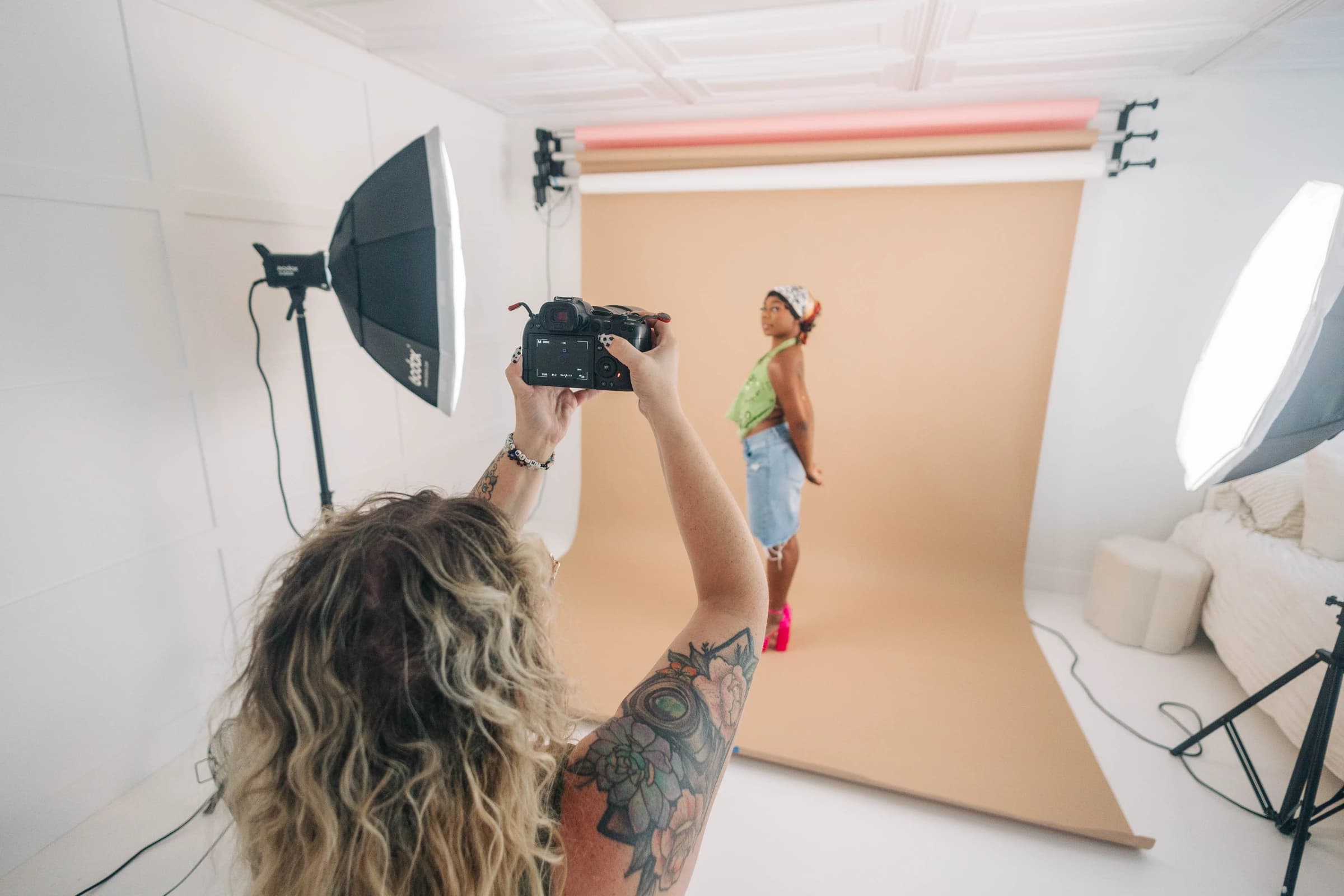
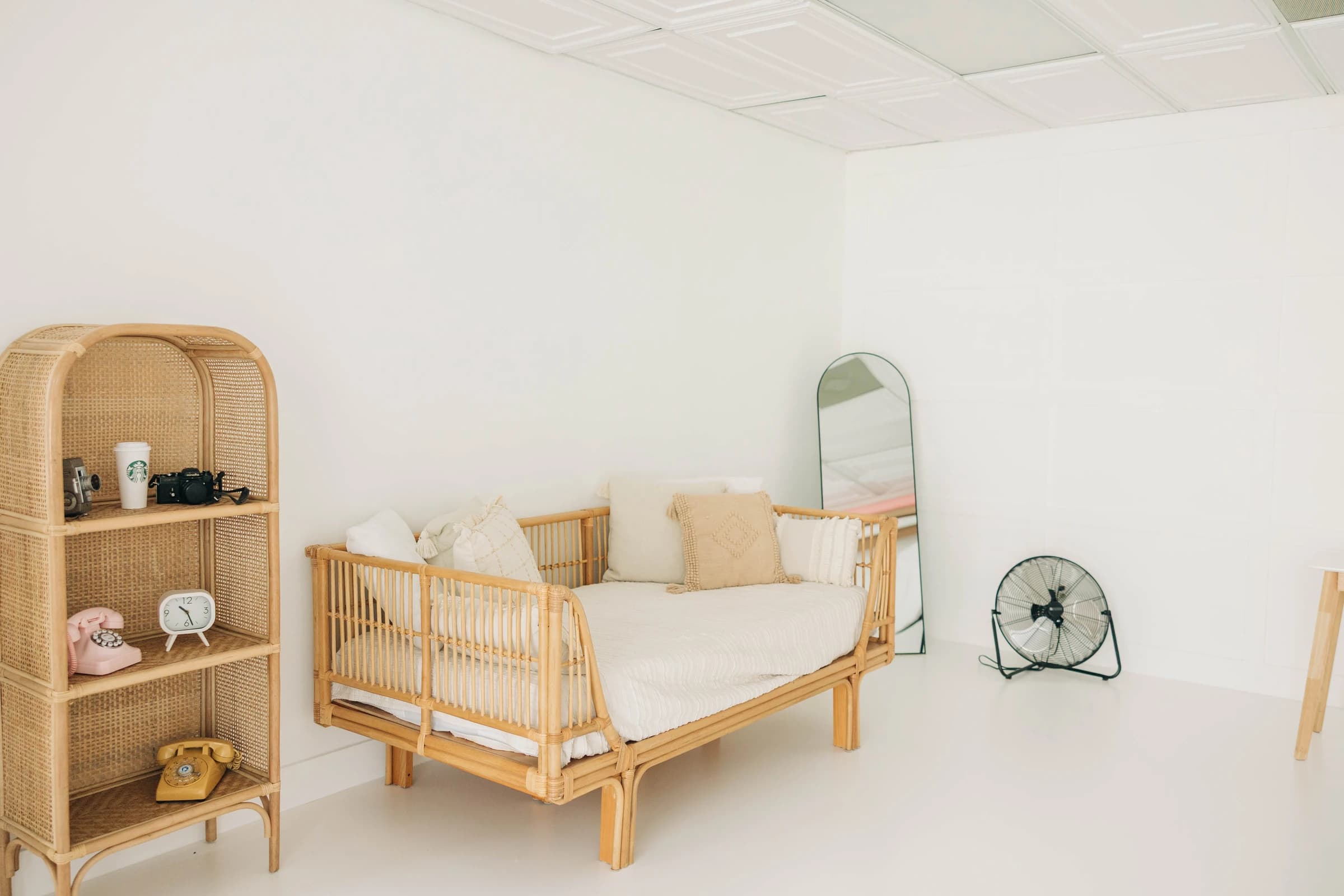
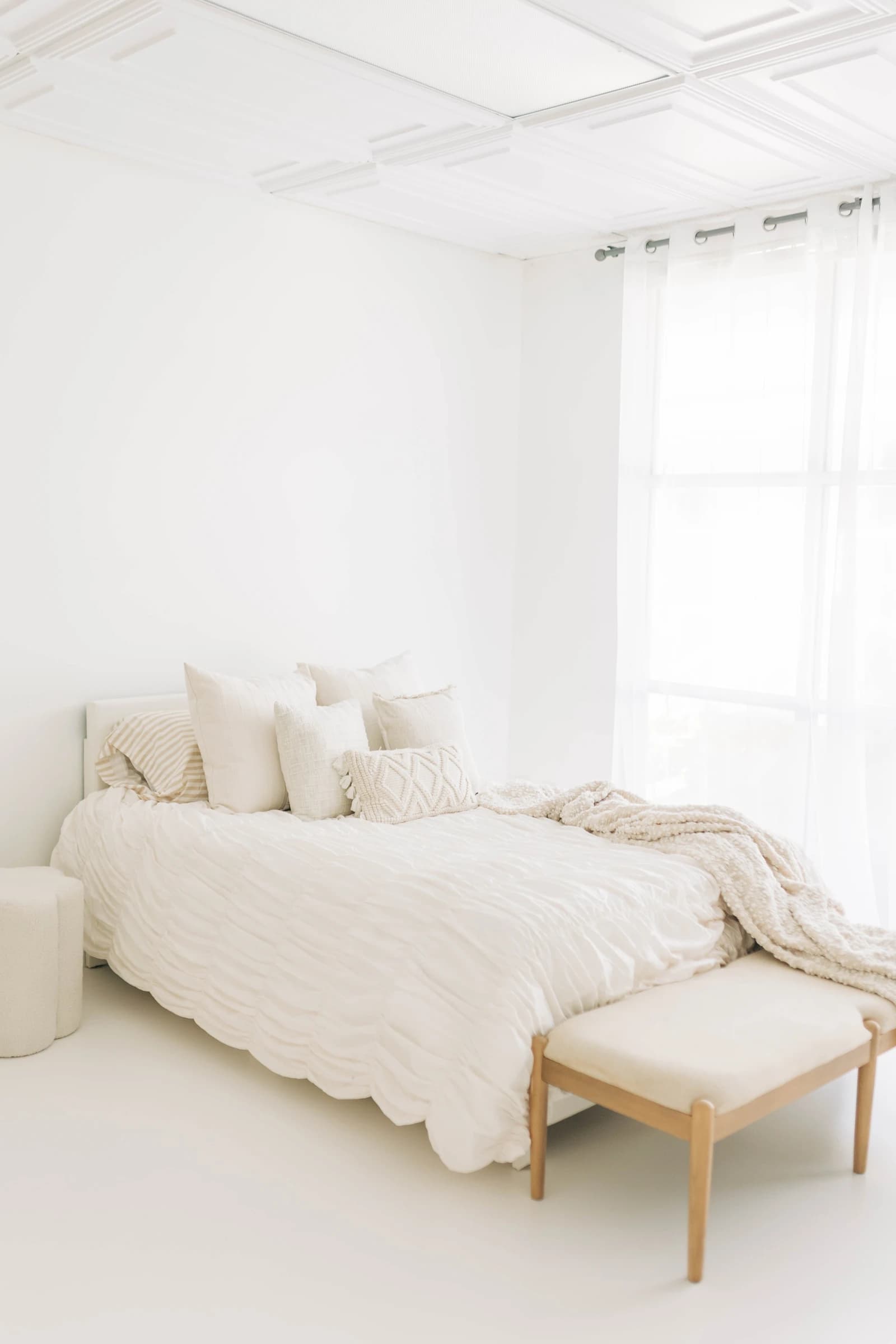
We have two private rooms under one roof, and they cover the two looks between them. Studio A has white-painted floors and soft afternoon light, with clean seamless paper backdrops. That is your bright, uncluttered commercial frame. Studio B has concrete floors, morning light, and an editorial feel with props and grid panels for character-forward, theatrical looks. Book one room or both studios by the hour, whatever your session needs.
You do not have to arrive camera-ready on your own, either. Our on-site stylist, Promising Looks, can get hair sorted in the building so you look polished without the pre-shoot scramble. If your headshots double as branding for a hosting reel, a website, or a spokesperson kit, the same setup handles that: see branding sessions for how we approach that side.
If you have been searching for actor headshots near you in the Orlando area, our Orlando studio rental is an easy drive from most of the metro, with free parking right out front and a 10-minute grace window on either side of your booked time. Every confirmed booking gets its own door code, so the space is yours the moment you arrive.
Book your session
Rates and open times live on the pricing page, which always shows the current numbers and lets you grab a slot in a couple of minutes. Book the room, bring your looks, and let the light do the flattering. We would love to help you put your best, most honest face in front of the people casting the work.